Black bog-rush (Schoenus nigricans)
Care, watering, light and tips for Black bog-rush on Floravia.
Quick facts
- Family: Cyperaceae
- Difficulty: Moderate care
- Watering: every 7 days
- Light: Partial shade
- Temperature: 10–30 °C
About Black bog-rush
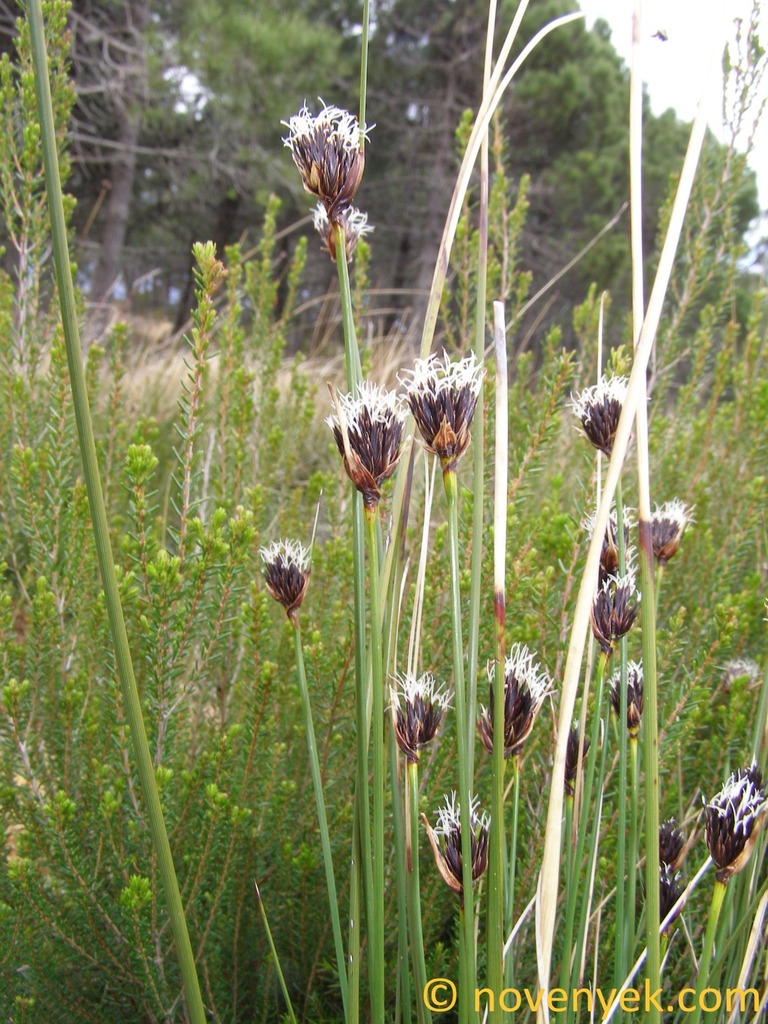
Schoenus nigricans, commonly known as black bog-rush or black sedge, is a perennial plant from the Cyperaceae family, forming dense clumps of erect, dark green to almost black stems. Its inflorescences are small, black spikelets appearing at the top of the stems. It is ideal for coastal gardens, wetlands, or for adding texture and a dramatic touch to pond edges and rock gardens.
Native range
Europe, North Africa, and parts of Asia, including the British Isles and the Mediterranean.
Care tips
This species prefers full sun to partial shade and consistently moist, even waterlogged soils, as it is a wetland plant. It adapts well to a wide range of soils, including poor ones, but thrives best in acidic to neutral substrates. Watering should be abundant and regular, especially in dry climates, and it tolerates salinity well. A common mistake is attempting to grow it in dry or well-drained soils, which will lead to its decline.
How to save a dying Black bog-rush
- Warning signs
- Dry/brown tips, soft/yellowish stems, no flowering, general decline.
- First aid
- Move to sunnier spot if in shade, ensure consistently moist soil, improve drainage if waterlogged.
- What kills it
- Prolonged drought (it's a wetland plant) or lack of direct sunlight. Doesn't tolerate dry soil.
- Can it be saved?
- Yes, if water or light issues are corrected promptly and no advanced rot is present at the base.