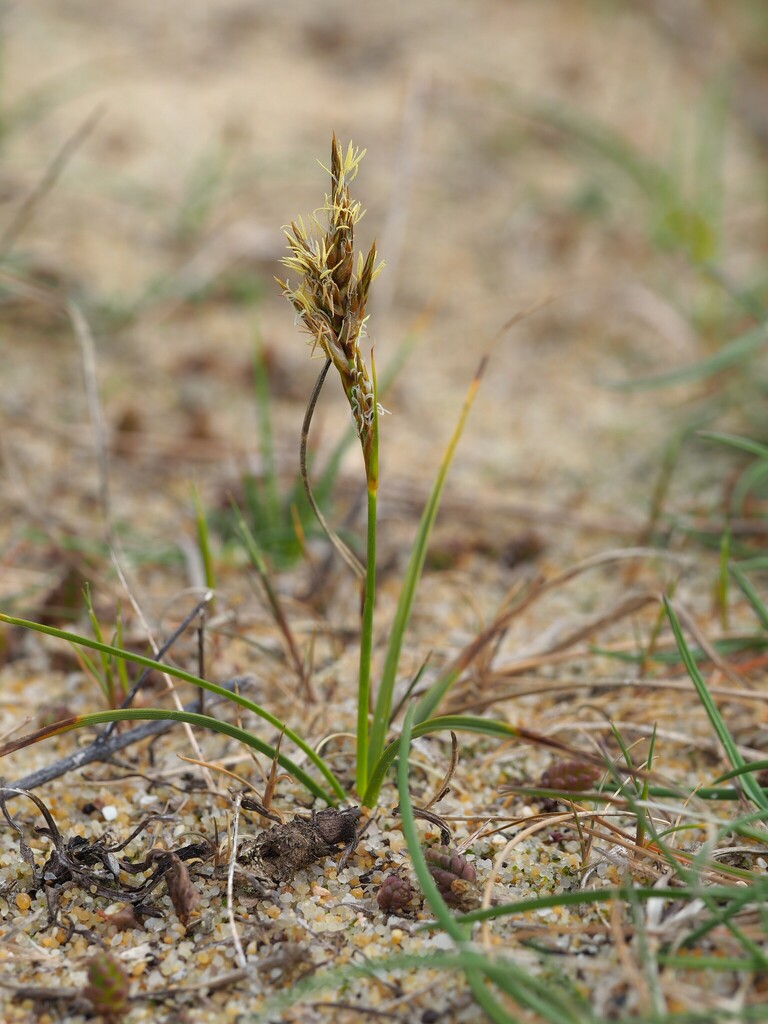
Sand sedge (Carex arenaria)
Care, watering, light and tips for Sand sedge on Floravia.
Quick facts
- Family: Cyperaceae
- Difficulty: Easy to care for
- Watering: every 7 days
- Light: Partial shade
- Temperature: 10–30 °C
About Sand sedge
Carex arenaria, commonly known as sand sedge or sandstarr, is a rhizomatous perennial grass native to the sandy coasts of Europe. It is characterized by its fine, arching grayish-green leaves and its ability to form dense clumps, making it ideal for stabilizing dunes, ground cover in coastal gardens, or as a low-maintenance ornamental plant in rock gardens.
Native range
Coasts of Western Europe
Care tips
It prefers full sun to partial shade and sandy, well-drained, preferably poor soils, tolerating salinity. Watering should be moderate once established, as it is very drought-tolerant; overwatering can be detrimental. A well-draining substrate is crucial to prevent root rot. Avoid planting it in heavy, clayey soils, as this can lead to its decline.
How to save a dying Sand sedge
- Warning signs
- Pale or yellowing leaves, dry tips. Slow or no growth. Compacted or waterlogged soil.
- First aid
- Repot in sandy, well-draining substrate. Prune damaged leaves. Ensure good air circulation.
- What kills it
- Overwatering or heavy soil. It doesn't tolerate waterlogging or lack of sand.
- Can it be saved?
- Yes, if substrate and watering are corrected quickly. It's hardy but needs sandy conditions.