Broad-leaved cotton-grass (Eriophorum latifolium)
Care, watering, light and tips for Broad-leaved cotton-grass on Floravia.
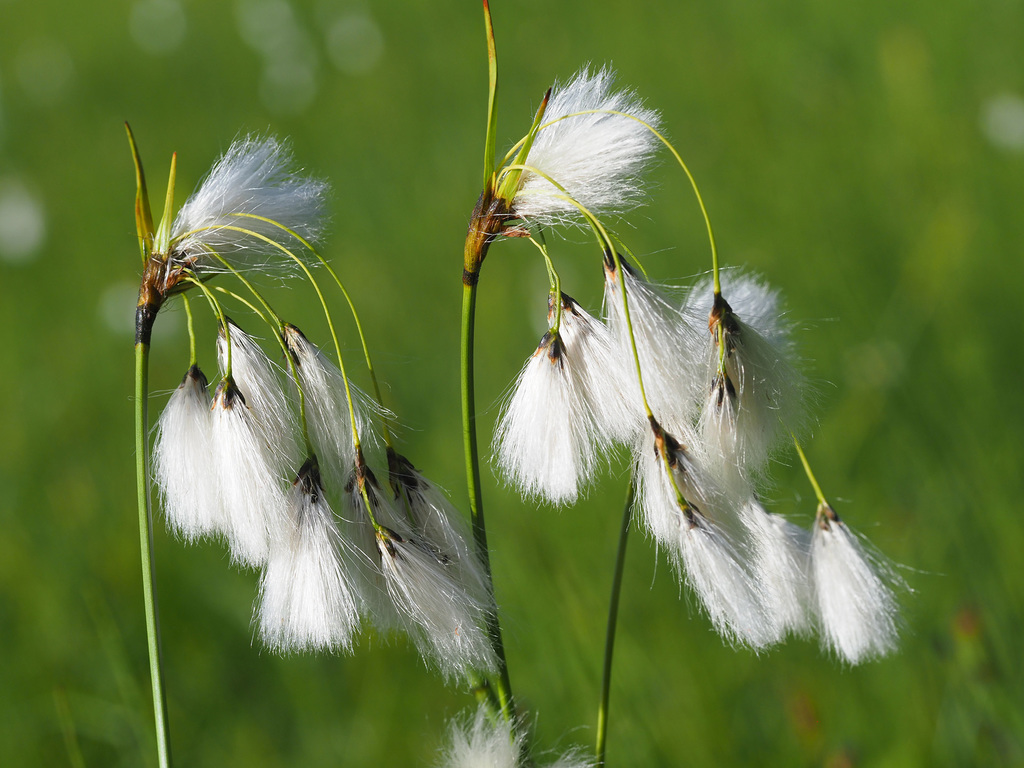
Quick facts
- Family: Cyperaceae
- Difficulty: Moderate care
- Watering: every 7 days
- Light: Partial shade
- Temperature: 10–30 °C
About Broad-leaved cotton-grass
Eriophorum latifolium, commonly known as broad-leaved cotton grass, is a perennial herbaceous plant from the Cyperaceae family, valued for its distinctive inflorescences resembling cotton tufts. Its slender stems and narrow leaves complement these soft, white seed heads, creating a delicate visual effect. It is ideal for wetland gardens, pond or stream edges, and moist meadows where its texture and color add unique seasonal interest.
Native range
Europe and temperate Asia
Care tips
This species thrives in full sun to partial shade, requiring bright exposure for good development. It needs consistently moist or even waterlogged soil, preferably acidic and rich in organic matter, mimicking its natural bog and marsh habitats. Watering should be abundant and frequent, ensuring the substrate never dries out completely. A common mistake is planting it in dry or well-drained soils, which leads to its rapid decline.
How to save a dying Broad-leaved cotton-grass
- Warning signs
- Wilting leaves turning brown from tips, limp appearance, lack of vigor.
- First aid
- Ensure constantly moist or waterlogged substrate. Move to a cooler spot with bright, indirect light.
- What kills it
- Substrate dryness is its worst enemy; also excessive heat and low humidity.
- Can it be saved?
- Yes, if you act quickly. It requires very humid and cool environments.