Night-blooming jasmine (Cestrum nocturnum)
Care, watering, light and tips for Night-blooming jasmine on Floravia.
Quick facts
- Family: Solanaceae
- Difficulty: Moderate care
- Watering: every 3 days
- Light: Full sun
- Temperature: 10–35 °C
- Toxicity: Toxic to pets
About Night-blooming jasmine
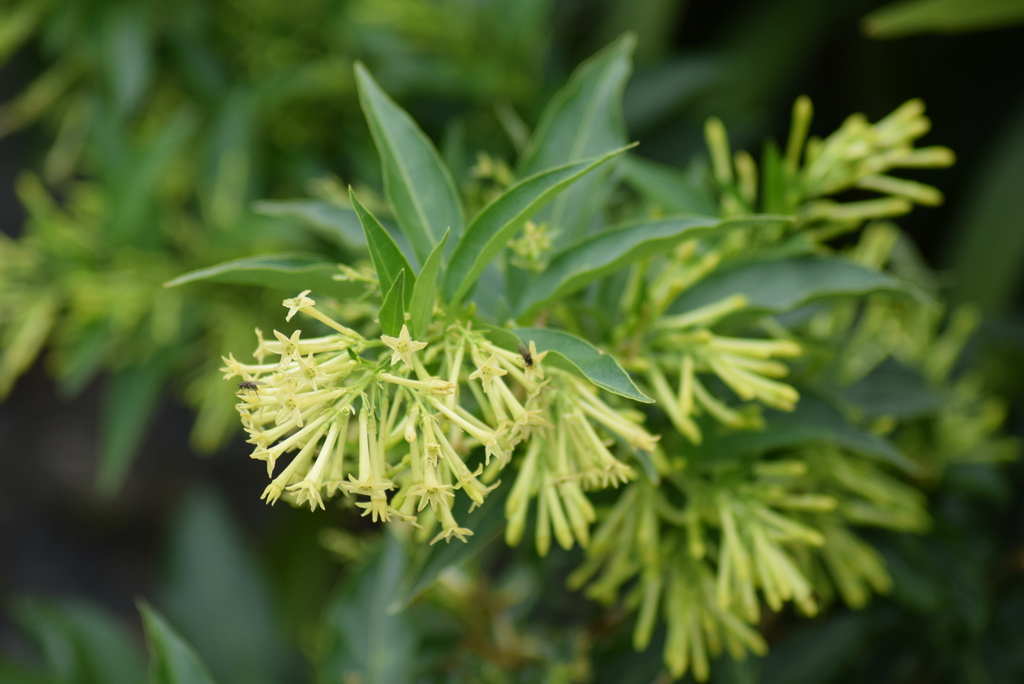
Cestrum nocturnum, commonly known as Night-blooming Jasmine or Lady of the Night, is a perennial shrub belonging to the Solanaceae family, renowned for the intense and sweet fragrance emitted by its creamy-white, tubular flowers, especially at dusk. Growing up to 4 meters tall, its branches are often somewhat lax, and its leaves are bright green. It is an ideal plant to place near windows, patios, or walkways where its intoxicating perfume can be enjoyed on warm evenings.
Native range
Antilles and Central America
Care tips
It requires a location in full sun to partial shade, receiving at least 4-6 hours of direct sunlight for optimal flowering. Watering should be regular, keeping the substrate moist but not waterlogged, especially during warmer months and flowering periods; reduce frequency in winter. It prefers fertile, well-drained, and slightly acidic soils. A common mistake to avoid is neglecting pruning, as it can become leggy and flower less; prune after flowering to maintain its shape and encourage growth.
How to save a dying Night-blooming jasmine
- Warning signs
- Yellow or drooping leaves, soft and wilted shoots, lack of flowering or dropped flowers.
- First aid
- Check watering (moist but not soggy soil), move to partial shade if strong direct sun, prune dry branches.
- What kills it
- Overwatering leading to root rot or lack of light. Also intense cold.
- Can it be saved?
- Yes, if roots aren't completely rotted and green shoots remain, it can recover with care.