Habanero (Capsicum chinense)
Care, watering, light and tips for Habanero on Floravia.
Quick facts
- Family: Solanaceae
- Difficulty: Moderate care
- Watering: every 3 days
- Light: Full sun
- Temperature: 10–35 °C
- Toxicity: Toxic to pets
About Habanero
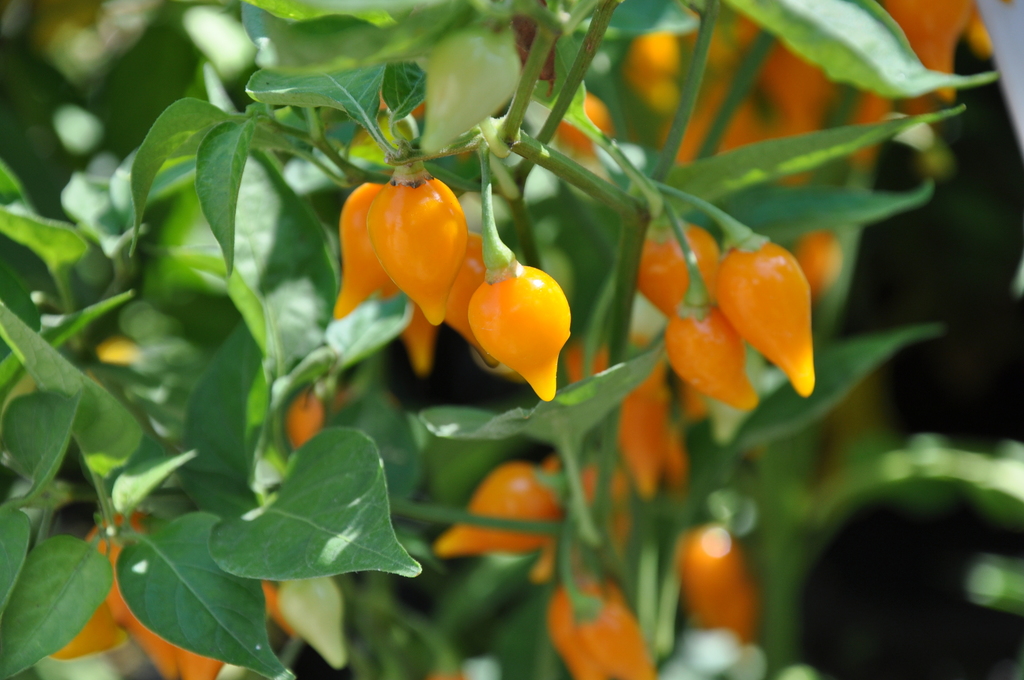
Capsicum chinense, commonly known as Habanero, is a chili species renowned for its extreme heat and distinctive fruity aroma. Its fruits, which vary in color from green to bright orange or red when ripe, are small and wrinkled, perfect for adding an exotic touch to cuisine. Although primarily a garden plant, its dense foliage and the vibrant colors of its chilies also make it an attractive ornamental plant for pots or sunny borders.
Native range
Amazon basin, specifically in Peru and Brazil, extending to other parts of South America and the Caribbean.
Care tips
It requires full sun (at least 6-8 hours daily) and warm temperatures, being very sensitive to cold. Watering should be regular and moderate, keeping the substrate moist but never waterlogged; excessive drought or inconsistent watering can cause flower and fruit drop. Use a well-draining substrate rich in organic matter, with a slightly acidic to neutral pH. A common mistake is not providing enough heat and light, which results in weak growth and poor chili production.
How to save a dying Habanero
- Warning signs
- Yellowing or drooping leaves, general wilting, flowers or fruits not setting.
- First aid
- Check watering (avoid waterlogging or drying out), repot if pot is too small, look for pests.
- What kills it
- Overwatering causing root rot; lack of light or low temperatures.
- Can it be saved?
- Yes, if roots are not completely rotted and action is taken quickly.