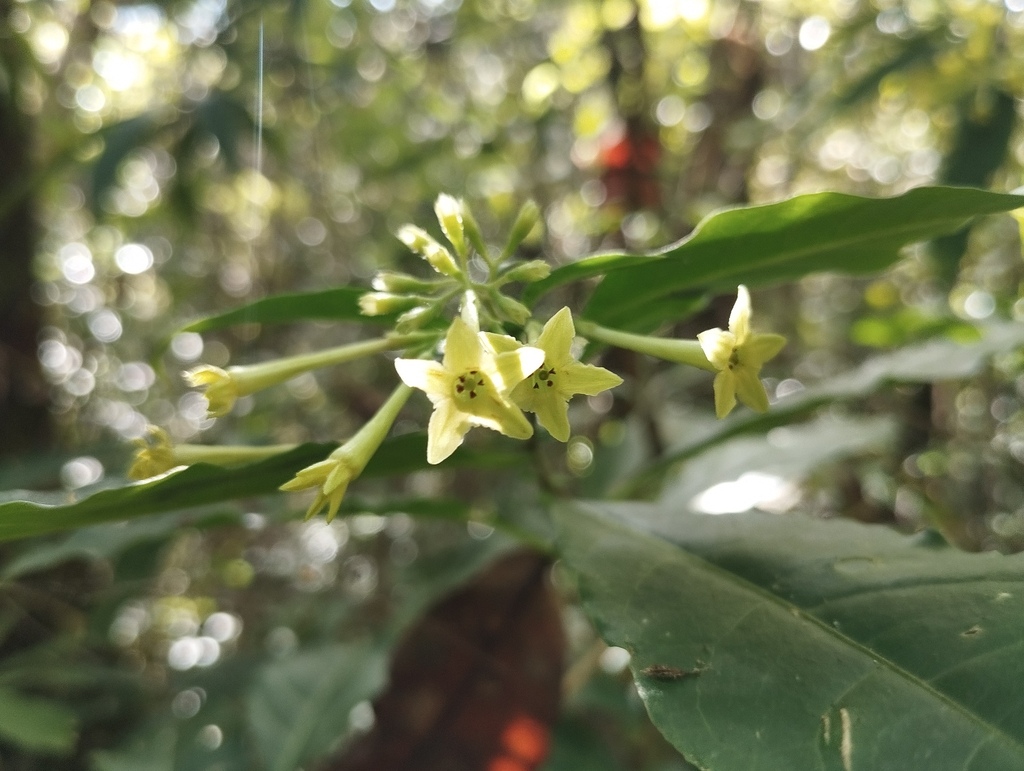
Red cestrum (Cestrum elegantissimum)
Care, watering, light and tips for Red cestrum on Floravia.
Quick facts
- Family: Solanaceae
- Difficulty: Moderate care
- Watering: every 3 days
- Light: Full sun
- Temperature: 10–35 °C
- Toxicity: Toxic to pets
About Red cestrum
Cestrum elegantissimum, commonly known as White Cestrum, is an evergreen shrub or small tree native to South America. It is notable for its clusters of creamy white, often fragrant, tubular flowers that bloom for much of the year, followed by small white berries. It is ideal for hedges, borders, or as a specimen plant in gardens seeking an elegant and floriferous touch.
Native range
Chile and Peru
Care tips
It prefers full sun to partial shade and well-drained, fertile, slightly acidic soil. Regular watering is required, especially in warm climates and during flowering, keeping the substrate moist but not waterlogged. A common mistake is a lack of pruning, which can lead to leggy growth; prune lightly after flowering to maintain a compact shape and encourage new blooms. It is sensitive to severe frosts, so in cold areas, it is recommended to protect it or grow it in a pot for shelter.
How to save a dying Red cestrum
- Warning signs
- Yellow or falling leaves, soft and black shoots, flowers not opening or dropping. Stress indicators due to lack or excess of water/light.
- First aid
- Check substrate moisture. If dry, water thoroughly. If waterlogged, carefully repot with new soil and drain well. Move to partial shade if exposed to intense direct sun. Prune dead branches.
- What kills it
- Constant waterlogging leading to root rot, or prolonged extreme drought. Also strong direct sun in very hot climates burning its tender leaves. Lack of nutrients.
- Can it be saved?
- Yes, if roots are not completely rotten or the main stem is not dry and brittle. Act quickly to adjust watering, light, and nutrition. Recovery is possible.