Mandrake (Mandragora officinarum)
Care, watering, light and tips for Mandrake on Floravia.
Quick facts
- Family: Solanaceae
- Difficulty: Demanding
- Watering: every 3 days
- Light: Full sun
- Temperature: 10–35 °C
- Toxicity: Toxic to pets
About Mandrake
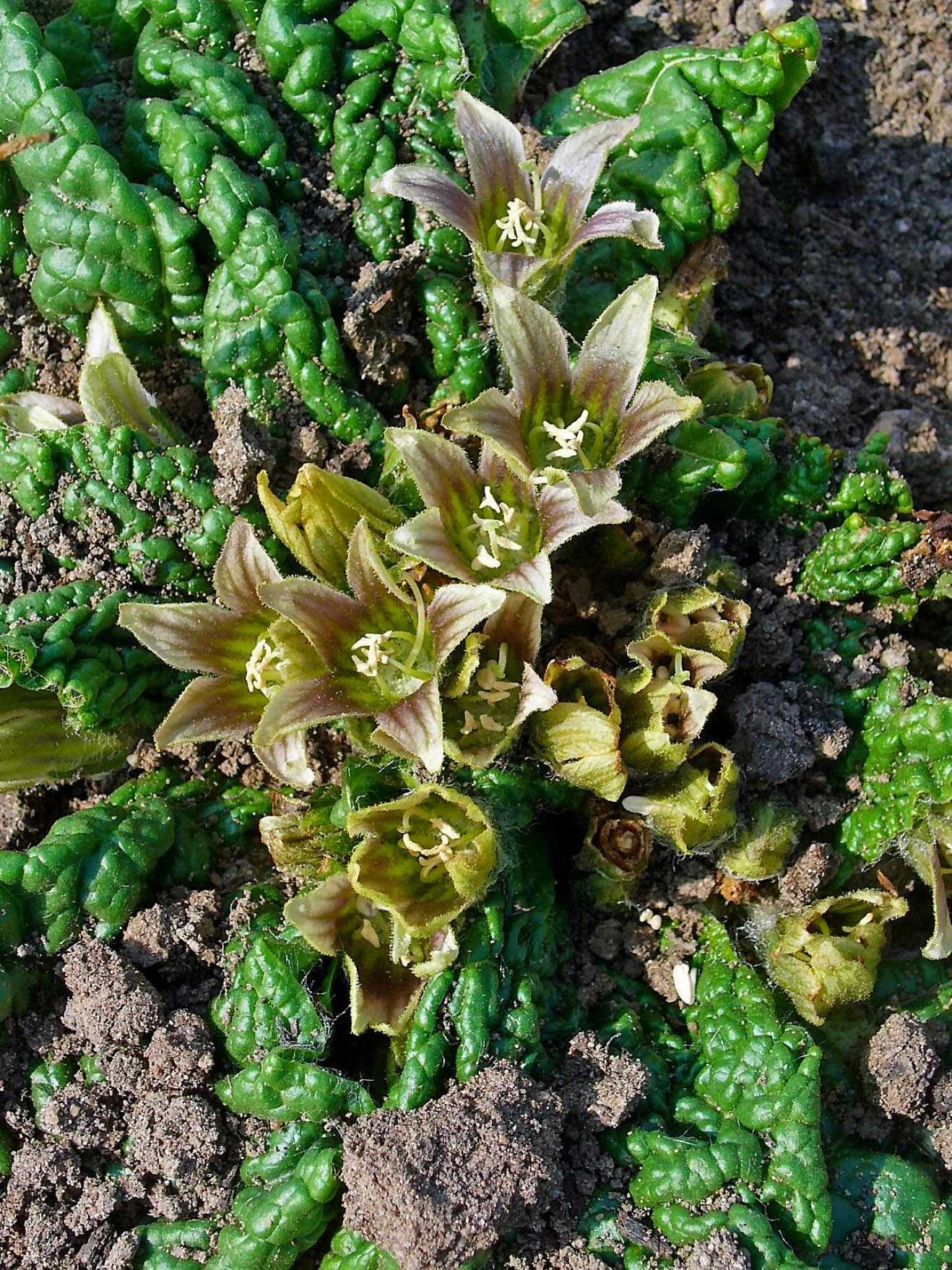
Mandragora officinarum, or Mediterranean mandrake, is a perennial herbaceous plant from the Solanaceae family, known for its fleshy, often bifurcated root resembling a human figure. Its large, crinkled leaves form a ground-level rosette, from which greenish-white or pale purple bell-shaped flowers emerge, followed by yellow berries. It's a fascinating plant for botanical collectors or historical-themed gardens, though its cultivation requires caution due to its toxicity.
Native range
Mediterranean region (Southern Europe, North Africa, and the Middle East)
Care tips
It requires full sun to light partial shade exposure and well-draining, sandy soil rich in organic matter, preferably alkaline. Watering should be moderate, allowing the substrate to dry out slightly between waterings, and reduced during its summer or winter dormancy period. It is crucial to avoid waterlogging, as its root is very susceptible to rot. A common mistake is frequently attempting to dig up or manipulate the root, which can severely stress the plant and affect its development.
How to save a dying Mandrake
- Warning signs
- Yellowing or wilting leaves, soft stems, rot at the base or exposed roots.
- First aid
- Repot into fresh, well-draining substrate. Inspect roots, remove rotten ones. Water only when substrate is dry.
- What kills it
- Overwatering. Mandrake roots are highly susceptible to rot from waterlogging.
- Can it be saved?
- Yes, if you act quickly. Good drainage and moderate watering are key to recovery.