Sandarac tree (Tetraclinis articulata)
Care, watering, light and tips for Sandarac tree on Floravia.
Quick facts
- Family: Cupressaceae
- Difficulty: Moderate care
- Watering: every 10 days
- Light: Partial shade
- Temperature: 10–30 °C
- Toxicity: Toxic to pets
About Sandarac tree
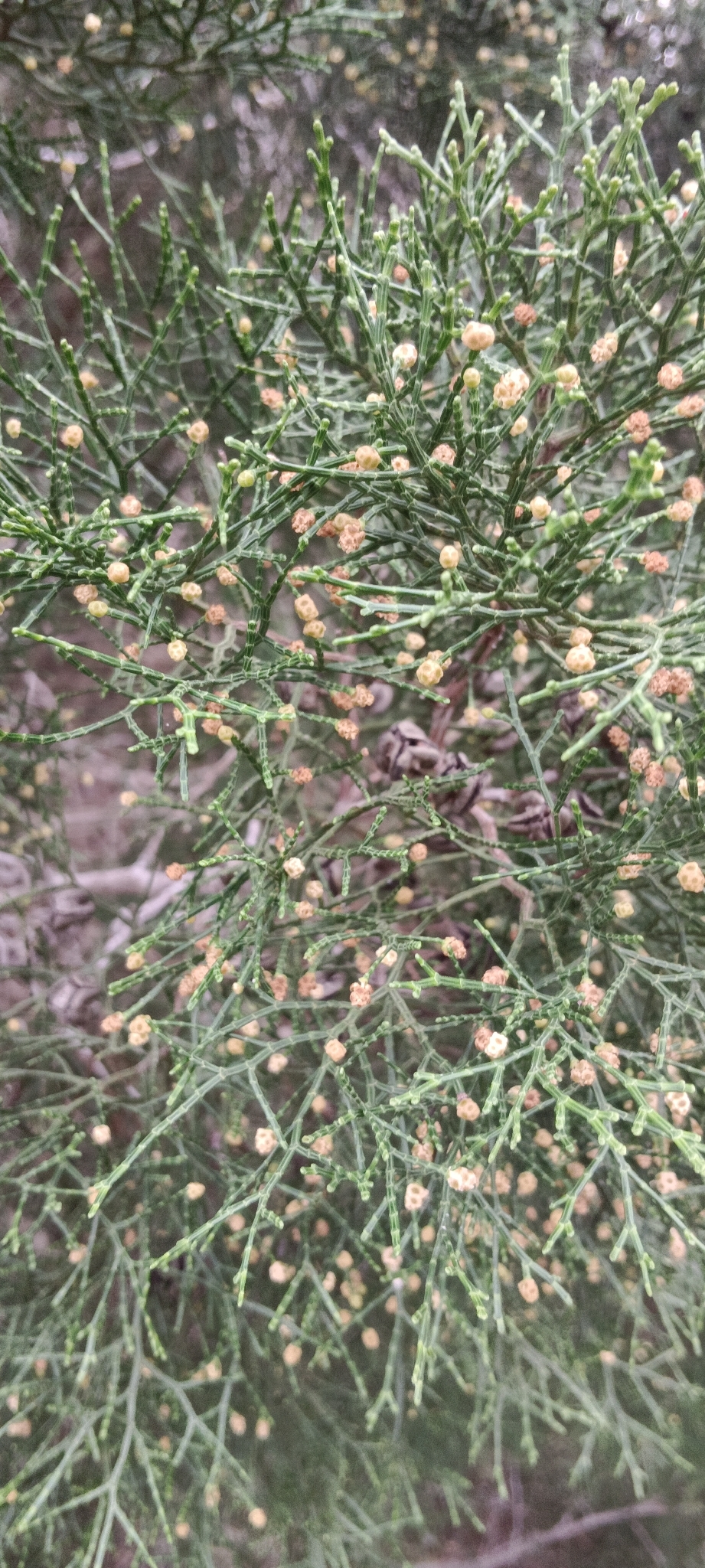
Tetraclinis articulata, also known as Atlantic Cypress or Barbary Thuya, is an evergreen coniferous tree or shrub native to Northwest Africa and Malta. It stands out for its dense, dark green scale-like foliage and reddish bark that peels in strips, adding interesting texture to the landscape. It is ideal for Mediterranean-style gardens, rocky areas, or as a standalone specimen due to its elegance and resilience.
Native range
Northwest Africa (Morocco, Algeria, Tunisia, and Malta)
Care tips
It requires full sun for optimal growth and prefers warm, dry climates. It is drought-tolerant once established but will appreciate occasional watering during very dry summers, always avoiding waterlogging. The substrate must be well-drained, preferably calcareous and poor, as it does not tolerate heavy or overly moist soils. A common mistake is overwatering, which can lead to root rot.
How to save a dying Sandarac tree
- Warning signs
- Dry, brittle branches without green foliage; widespread yellowing or browning, especially at tips.
- First aid
- Repot into a larger container with good drainage, use specific conifer substrate. Water deeply if soil is dry.
- What kills it
- Constant waterlogging leading to root rot; also prolonged drought or very compact substrate.
- Can it be saved?
- Yes, if roots are not completely rotted and some flexible, green branches remain inside.