Bald cypress (Taxodium distichum)
Care, watering, light and tips for Bald cypress on Floravia.
Quick facts
- Family: Cupressaceae
- Difficulty: Moderate care
- Watering: every 7 days
- Light: Partial shade
- Temperature: 10–30 °C
About Bald cypress
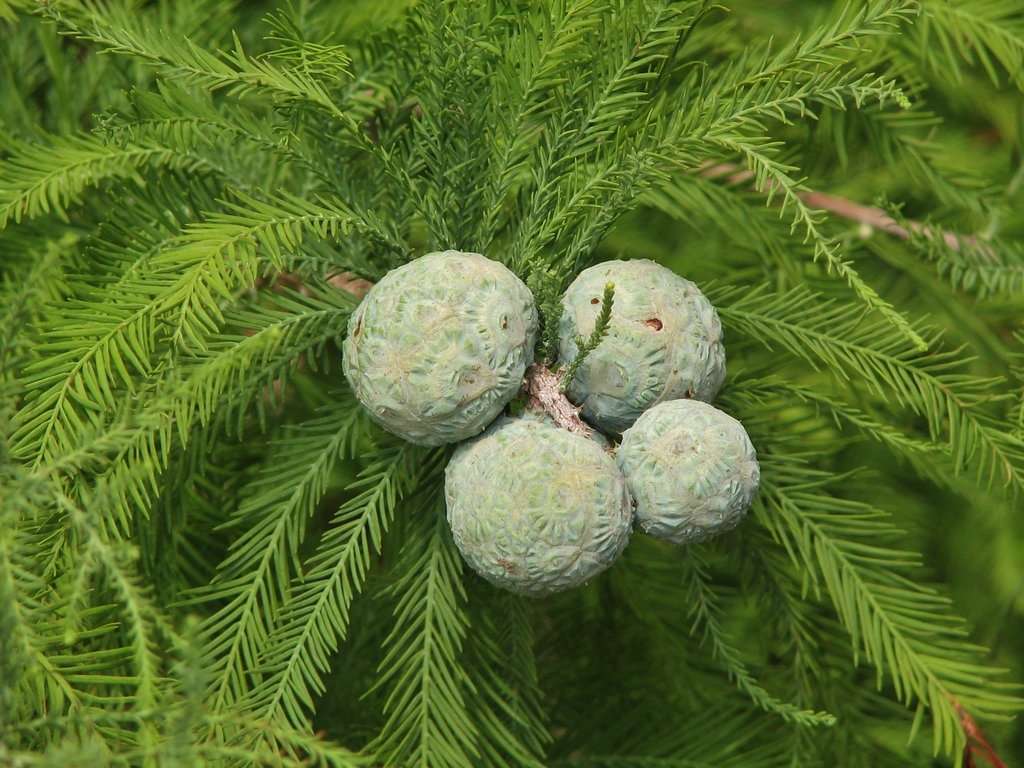
Taxodium distichum, commonly known as Bald Cypress, is a majestic deciduous conifer native to the wetlands of the southeastern United States. It is distinguished by its bright green foliage that turns reddish-bronze in autumn before shedding, and by its characteristic aerial 'knees' in wet soils. It is ideal as an ornamental tree in large gardens, parks, or along water bodies, where its pyramidal silhouette and resilience add great landscape value.
Native range
Southeastern United States, from Delaware south to Florida and west to Texas.
Care tips
It prefers full sun exposure for optimal growth and good autumn coloration. Although it tolerates dry soils once established, it thrives in consistently moist conditions, even waterlogged soils, so watering should be abundant, especially in its early years. It adapts to a wide range of substrates but prefers rich, acidic ones. A common mistake is planting it in spaces that are too small, as it requires ample room for its development.
How to save a dying Bald cypress
- Warning signs
- Yellowing or browning needles dropping prematurely, dead branches from the tip. Bark may crack.
- First aid
- Ensure deep, consistent watering, especially during drought. Check drainage and soil quality. Protect from excessive wind.
- What kills it
- Prolonged lack of water (especially when young) or poor drainage suffocating roots. Extreme drought is fatal.
- Can it be saved?
- Yes, if roots aren't completely damaged. Act quickly with proper watering and soil improvement. Look for new growth.