Rocky Mountain juniper (Juniperus scopulorum)
Care, watering, light and tips for Rocky Mountain juniper on Floravia.
Quick facts
- Family: Cupressaceae
- Difficulty: Easy to care for
- Watering: every 10 days
- Light: Partial shade
- Temperature: 10–30 °C
- Toxicity: Toxic to pets
About Rocky Mountain juniper
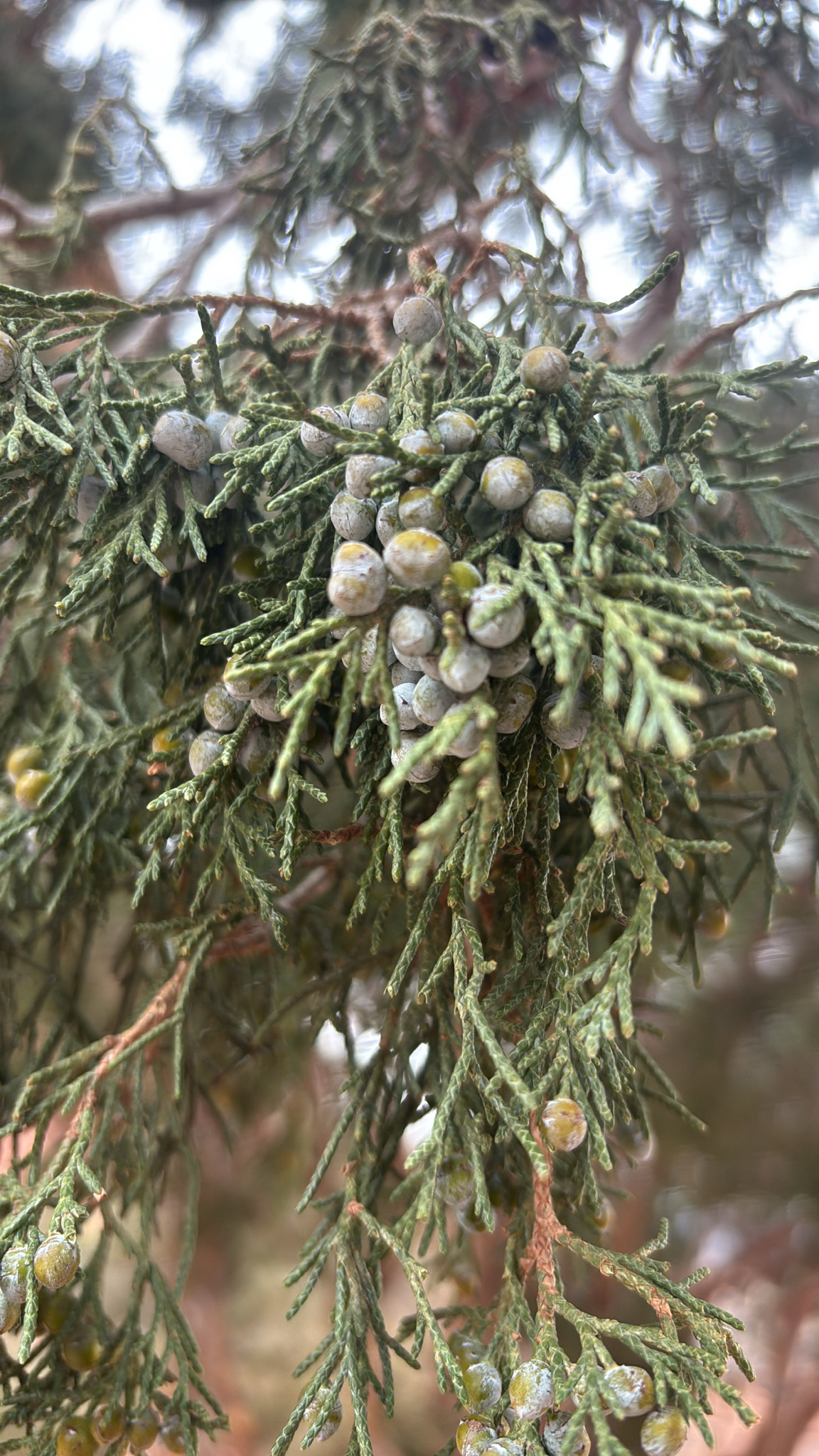
Juniperus scopulorum, commonly known as the Rocky Mountain Juniper, is an evergreen conifer with a columnar or pyramidal habit that can reach significant heights, offering an elegant and distinctive silhouette. Its scale-like leaves are blue-green to silvery, often producing small bluish cones resembling berries. It's an excellent choice for xeriscape gardens, as a windbreak, or as a specimen plant in large landscapes, providing year-round structure and color.
Native range
North America (primarily the western United States and Canada)
Care tips
This juniper thrives in full sun and well-drained soils, preferring dry conditions once established. It tolerates a wide range of soil types, including poor ones, but good drainage is crucial to prevent root rot. Watering should be moderate, allowing the soil to dry out completely between waterings, especially in arid climates. Avoid overwatering, which is the most common and detrimental mistake for this drought-tolerant species.
How to save a dying Rocky Mountain juniper
- Warning signs
- Yellow needles turning brown and dry, starting at tips or lower branches. Entire branches dry and brittle.
- First aid
- Check soil drainage and moisture. If dry, water deeply. If waterlogged, improve drainage. Prune dead branches.
- What kills it
- Overwatering (root rot) or prolonged drought in dry climates. Lack of direct sunlight.
- Can it be saved?
- Yes, if root rot isn't too advanced or if water stress is recent. Act quickly.