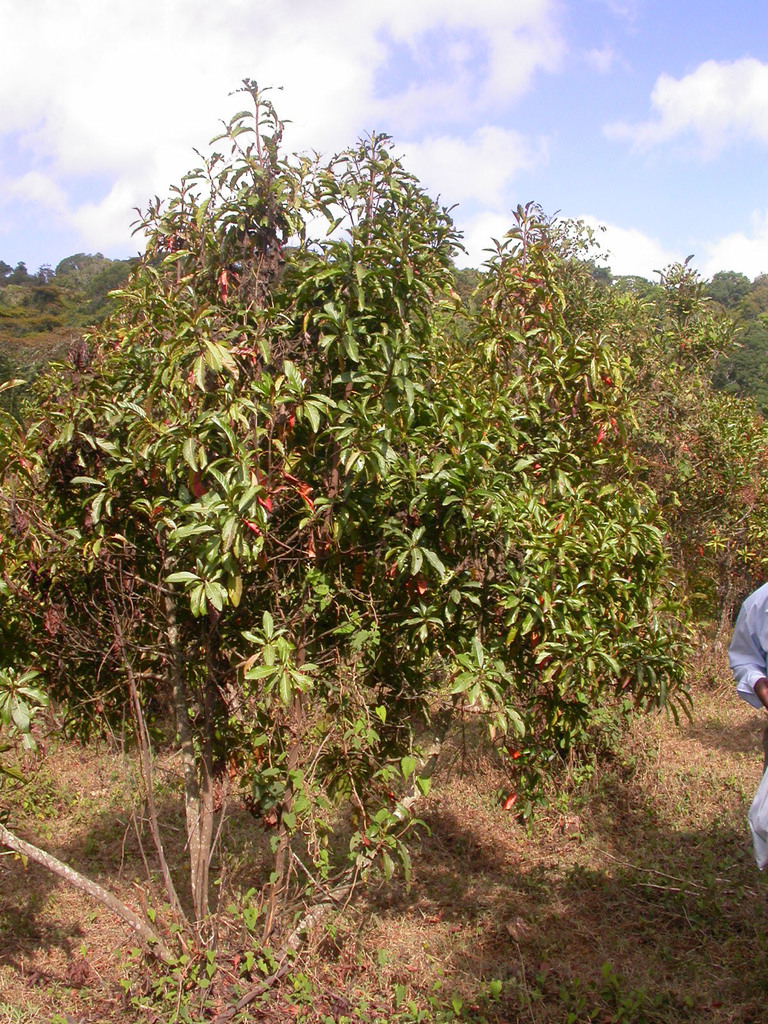
Quina (Cinchona officinalis)
Care, watering, light and tips for Quina on Floravia.
Quick facts
- Family: Rubiaceae
- Difficulty: Demanding
- Watering: every 7 days
- Light: Partial shade
- Temperature: 10–30 °C
- Toxicity: Toxic to pets
About Quina
Cinchona officinalis, known as Quina or Fever Tree, is a tree native to the Andes, famous for its bark from which quinine is extracted. It features dark green oval leaves and pink or reddish flowers in panicles. It is ideal for botanical gardens or tropical plant collections, where its historical and medicinal value can be appreciated.
Native range
Andean forests of South America, from Colombia to Bolivia.
Care tips
It requires bright but indirect light, avoiding strong midday direct sun exposure. Watering should be regular to keep the substrate moist but not waterlogged, reducing frequency in winter. It prefers acidic, well-drained soils rich in organic matter. A common mistake is overwatering or lack of acidity in the substrate, which can lead to chlorosis.
How to save a dying Quina
- Warning signs
- Yellowish/brown, wilting, premature leaf drop, soft stems. May indicate water stress or nutrient deficiency.
- First aid
- Check watering (constant moisture, but not waterlogged). Ensure good drainage. Verify sun exposure (prefers partial shade). Fertilize lightly.
- What kills it
- Prolonged drought or constant waterlogging. Cinchona needs regular moisture, but soggy soil rots its roots.
- Can it be saved?
- Yes, if roots are not completely rotted and main trunk is unaffected. Act quickly with first aid.