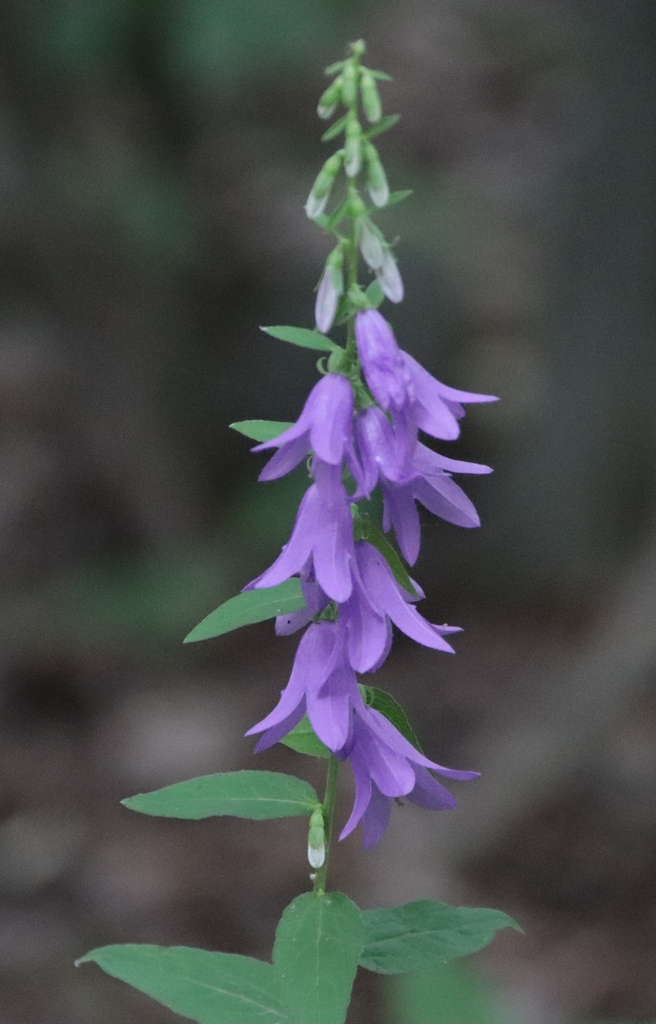
Creeping bellflower (Campanula rapunculoides)
Care, watering, light and tips for Creeping bellflower on Floravia.
Quick facts
- Family: Campanulaceae
- Difficulty: Easy to care for
- Watering: every 7 days
- Light: Partial shade
- Temperature: 10–30 °C
About Creeping bellflower
Campanula rapunculoides, commonly known as Creeping Bellflower, is a perennial herbaceous plant featuring attractive bell-shaped purple flowers that emerge in spires. It's a charming addition to wild gardens, roadside borders, or meadows, though its vigorous growth requires attention. Its flowers look best in mass plantings or as a vertical accent in informal compositions.
Native range
Europe and temperate Asia
Care tips
It prefers full sun to partial shade locations and well-drained soil, although it tolerates a wide range of conditions. Moderate watering is essential, allowing the substrate to dry slightly between waterings, as it is susceptible to waterlogging. A common mistake is underestimating its spreading capacity; it is recommended to deadhead spent flowers to prevent excessive self-seeding and to consider root barriers in areas where its expansion is not desired. It is not demanding in terms of nutrients, but slightly fertile soil will promote more abundant flowering.
How to save a dying Creeping bellflower
- Warning signs
- Yellow or wilting leaves, soft stems, no blooms. Can become invasive if not controlled.
- First aid
- Remove spent flowers and dead leaves. Check drainage and soil moisture. If invasive, prune roots and stems.
- What kills it
- Overwatering causing root rot or complete drought. Also dense shade or nutrient deficiency.
- Can it be saved?
- Yes, if roots aren't completely rotted. It's very resilient and recovers with proper care.