Spider flower (Gynandropsis gynandra)
Care, watering, light and tips for Spider flower on Floravia.
Quick facts
- Family: Cleomaceae
- Difficulty: Easy to care for
- Watering: every 3 days
- Light: Partial shade
- Temperature: 10–30 °C
- Toxicity: Toxic to pets
About Spider flower
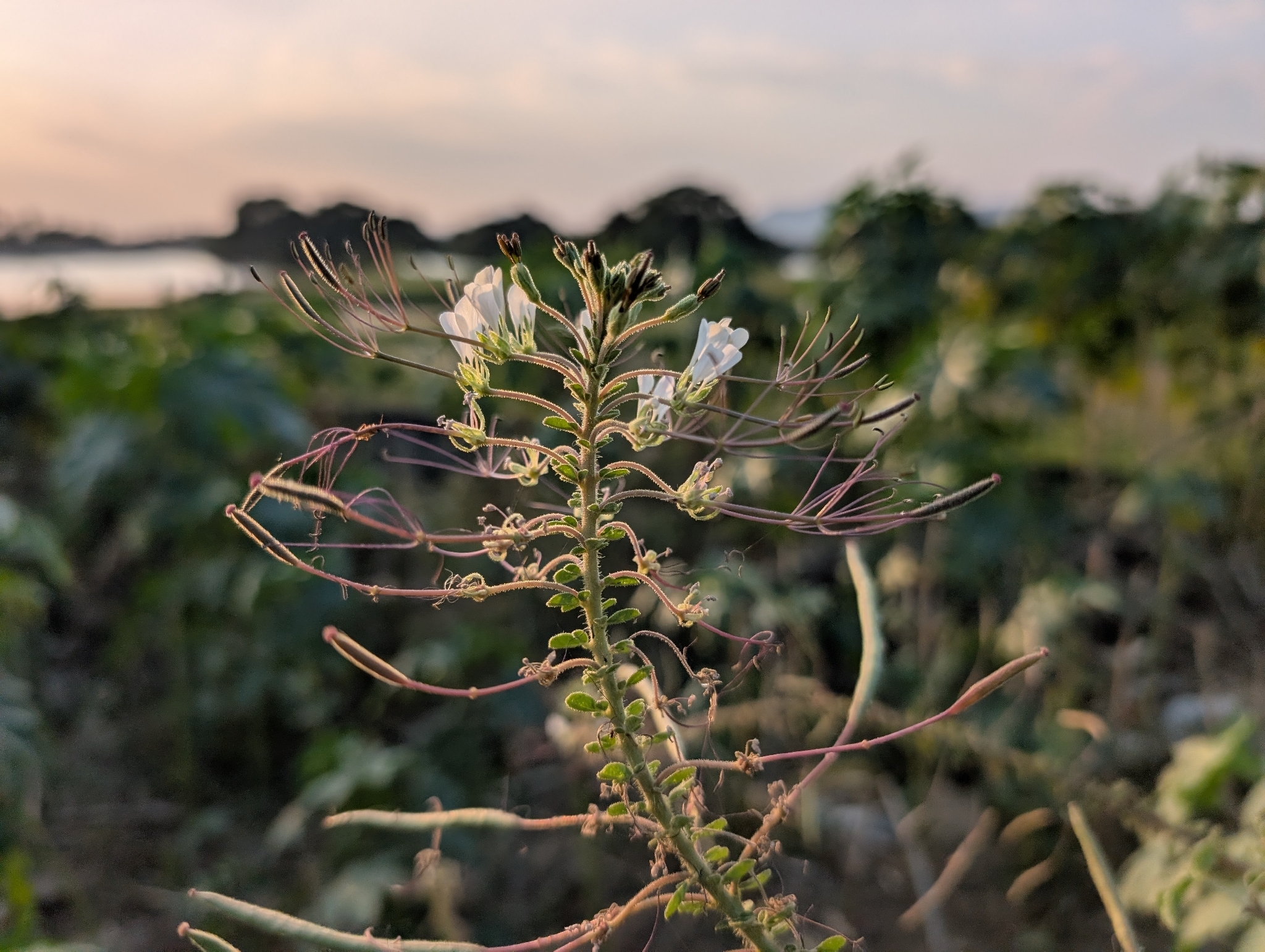
Gynandropsis gynandra, commonly known as 'Spiderwisp' or 'Spider Mustard', is an annual herbaceous plant from the Cleomaceae family, valued for both its culinary and ornamental properties. It is characterized by its palmate leaves and distinctive flowers with long stamens resembling spider legs, blooming in white or pink hues. It is ideal for vegetable gardens, garden borders, or as a potted plant, adding an exotic and edible touch.
Native range
Tropical and subtropical Africa, tropical Asia
Care tips
It prefers full sun exposure or light partial shade for optimal growth and abundant flowering. Watering should be regular, keeping the substrate moist but not waterlogged, especially in warm climates. Use a well-draining substrate rich in organic matter. Avoid excessive nitrogen fertilization, as it can promote foliage growth at the expense of flowering.
How to save a dying Spider flower
- Warning signs
- Yellowish or pale leaves, generalized wilting, stunted growth. Soft, blackened stems indicate rot.
- First aid
- If wilting, check substrate moisture. If dry, water thoroughly. If wet and soft, stop watering and improve drainage. Move to partial shade.
- What kills it
- Overwatering (rots roots quickly) or extreme, prolonged drought. Also intense direct sun in very hot climates.
- Can it be saved?
- Yes, if roots are not completely rotted or wilting is not extreme. Act quickly by correcting watering and sun exposure.