Crocodile aloe (Aloe brevifolia)
Care, watering, light and tips for Crocodile aloe on Floravia.
Quick facts
- Family: Asphodelaceae
- Difficulty: Easy to care for
- Watering: every 15 days
- Light: Partial shade
- Temperature: 10–30 °C
- Toxicity: Toxic to pets
About Crocodile aloe
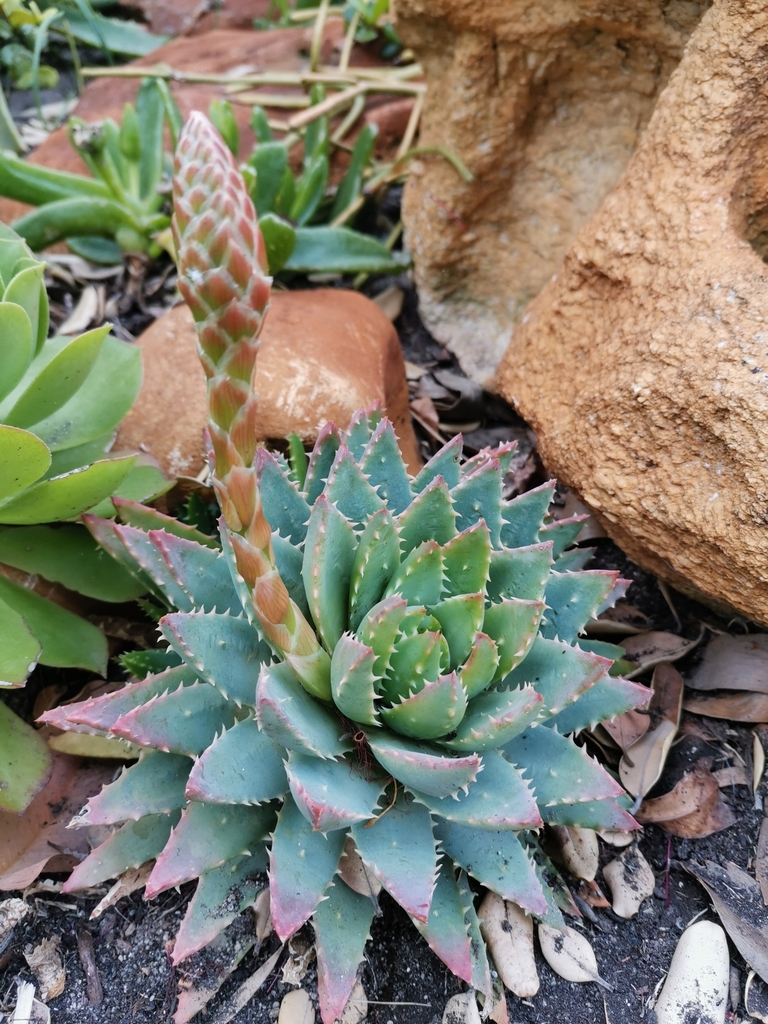
Aloe brevifolia, known as 'Short-leaved Aloe', is a compact and attractive succulent native to South Africa. Its short, triangular, blue-green leaves, which turn reddish with intense sun exposure, form dense rosettes that spread and create mats. It is ideal for rockeries, xeriscaping, or as a potted plant in bright indoor spaces.
Native range
South Africa
Care tips
It requires full sun or bright indirect light to maintain its coloration and compact shape. Watering should be moderate, allowing the substrate to dry out completely between waterings, especially in winter. Use a well-draining substrate specifically for cacti and succulents. Avoid overwatering, as it is the main cause of root rot in this species.
How to save a dying Crocodile aloe
- Warning signs
- Soft, wrinkled, dull, almost translucent leaves, or rot at the base. Dry, brown tips are also a warning.
- First aid
- If rotting, remove plant, cut rotten parts with clean blade, air dry for days, then repot in dry soil. If dehydrated, moderate watering and indirect light.
- What kills it
- Overwatering is its main killer, especially in winter. Also gradual lack of light or extreme cold. Does not tolerate waterlogging.
- Can it be saved?
- Yes! It's very resilient. Act quickly with rot. If only dehydrated, it will recover easily. Cutting and propagating healthy offsets is a last resort.