Dwarf elder (Sambucus ebulus)
Care, watering, light and tips for Dwarf elder on Floravia.
Quick facts
- Family: Viburnaceae
- Difficulty: Easy to care for
- Watering: every 7 days
- Light: Partial shade
- Temperature: 10–30 °C
- Toxicity: Toxic to pets
About Dwarf elder
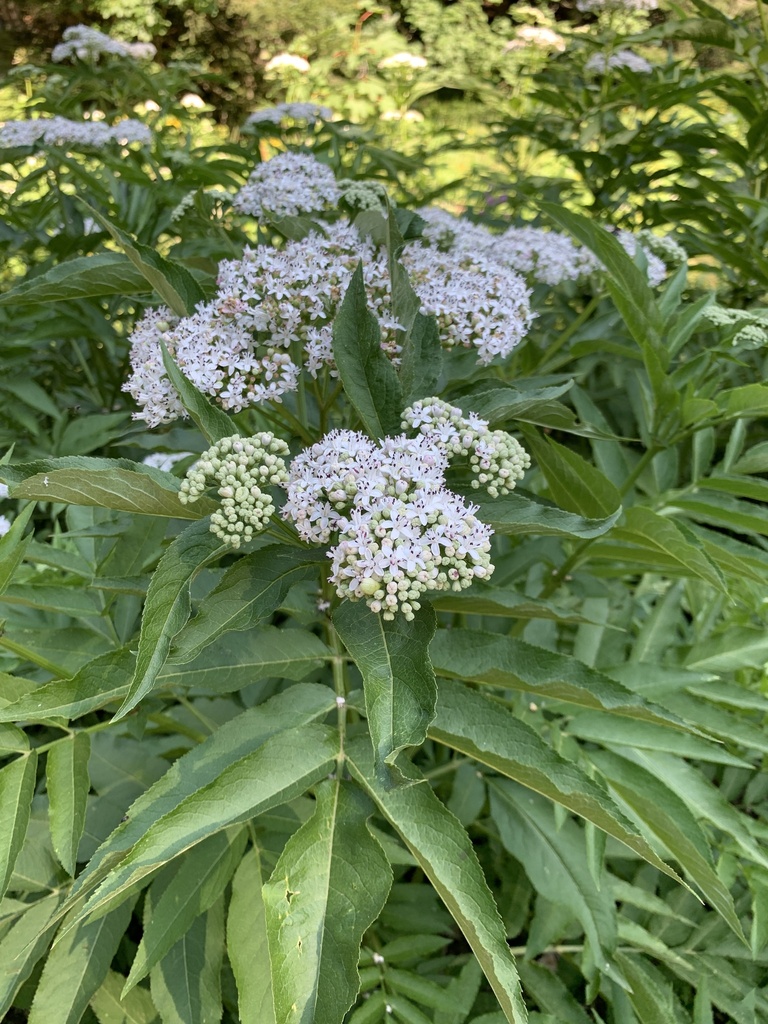
Dwarf elder (Sambucus ebulus) is a perennial herbaceous plant from the Viburnaceae family, distinguished by its reddish stems, pinnate leaves, and white flower umbels with pink anthers. Although attractive, this species is poisonous in all its parts, so it's best appreciated in its natural habitat or in wildlife gardens where it can be kept out of reach of children and pets. It blooms in summer and produces shiny black berries, which, like the rest of the plant, are toxic if ingested raw.
Native range
Europe, North Africa and Southwest Asia
Care tips
Dwarf elder thrives in moist, well-drained soils, preferably rich in organic matter, and prefers full sun to partial shade exposure. It is a robust, low-maintenance plant that tolerates a wide range of conditions, but it's crucial to remember that it is toxic and should not be grown in places where it might be accidentally ingested. It does not require regular fertilization and can even become invasive if conditions are too favorable, so controlling its spread by removing suckers is recommended. A common mistake is confusing it with common elder (Sambucus nigra), which has edible berries after cooking, but dwarf elder is poisonous and should never be consumed.
How to save a dying Dwarf elder
- Warning signs
- Yellowing or wilting leaves, soft or blackened stems. May indicate overwatering or lack of light.
- First aid
- Check drainage and soil moisture. Ensure good ventilation and bright, indirect light.
- What kills it
- Constant waterlogging, leading to root rot. Also, a complete lack of light.
- Can it be saved?
- Yes, if roots are not completely rotted and you act quickly to correct watering.