American elderberry (Sambucus canadensis)
Care, watering, light and tips for American elderberry on Floravia.
Quick facts
- Family: Viburnaceae
- Difficulty: Easy to care for
- Watering: every 7 days
- Light: Partial shade
- Temperature: 10–30 °C
- Toxicity: Toxic to pets
About American elderberry
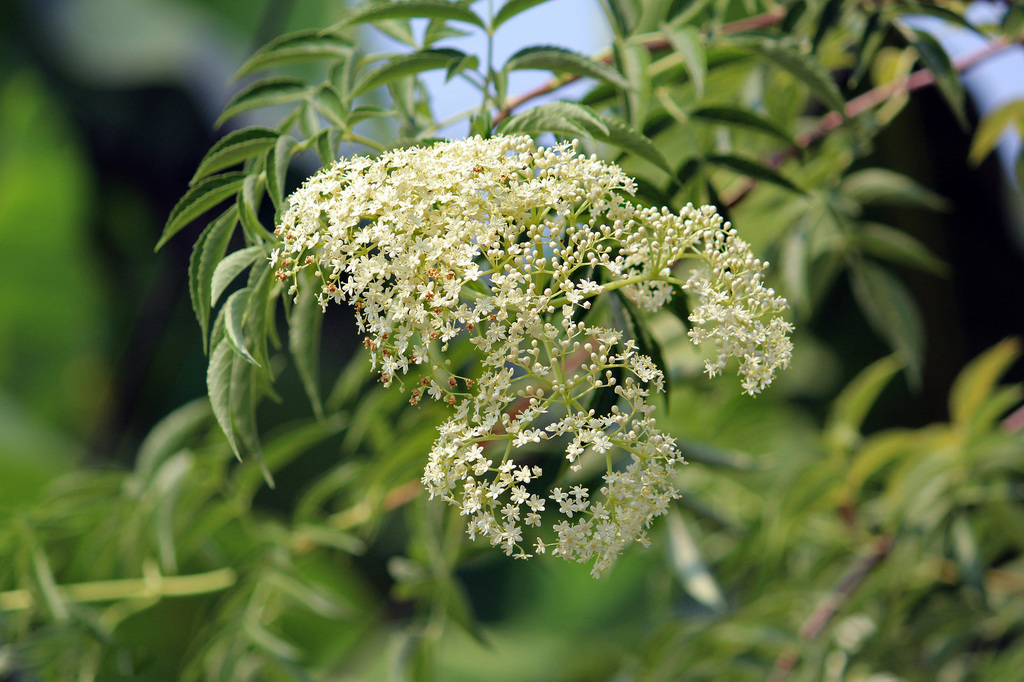
Sambucus canadensis, commonly known as American elderberry, is a fast-growing deciduous shrub valued for its large clusters of creamy white flowers in spring and dark purple berries in summer. It can reach heights of 2 to 3 meters and similar widths, with vibrant green foliage that turns yellowish in autumn. It is ideal for informal hedges, woodland edges, or as an ornamental plant in natural and wild gardens, attracting pollinators and birds.
Native range
North America: from southeastern Canada to the eastern and central United States, and northeastern Mexico.
Care tips
It prefers full sun to partial shade, thriving best with at least 6 hours of direct sunlight per day. Watering should be regular to keep the soil moist, especially during dry periods and in its early years of establishment, although it tolerates some drought once mature. It adapts to a wide range of soils but prefers moist, well-drained, and organic-rich soils. A common mistake is planting it in excessively dry or compacted soils, which can limit its growth and fruit production.
How to save a dying American elderberry
- Warning signs
- Yellowing or browning, wilting leaves; no flowers or fruits. Dry, brittle branches.
- First aid
- Check soil drainage and moisture. Prune dead branches. Protect from intense direct sun and extreme cold.
- What kills it
- Waterlogged or very dry soil. Prolonged exposure to strong sun without protection. Nutrient deficiency.
- Can it be saved?
- Yes, if roots aren't rotted or completely dry. Act quickly to adjust watering and location.