Osage orange (Maclura pomifera)
Care, watering, light and tips for Osage orange on Floravia.
Quick facts
- Family: Moraceae
- Difficulty: Easy to care for
- Watering: every 9 days
- Light: Indirect light
- Temperature: 16–28 °C
- Toxicity: Toxic to pets
About Osage orange
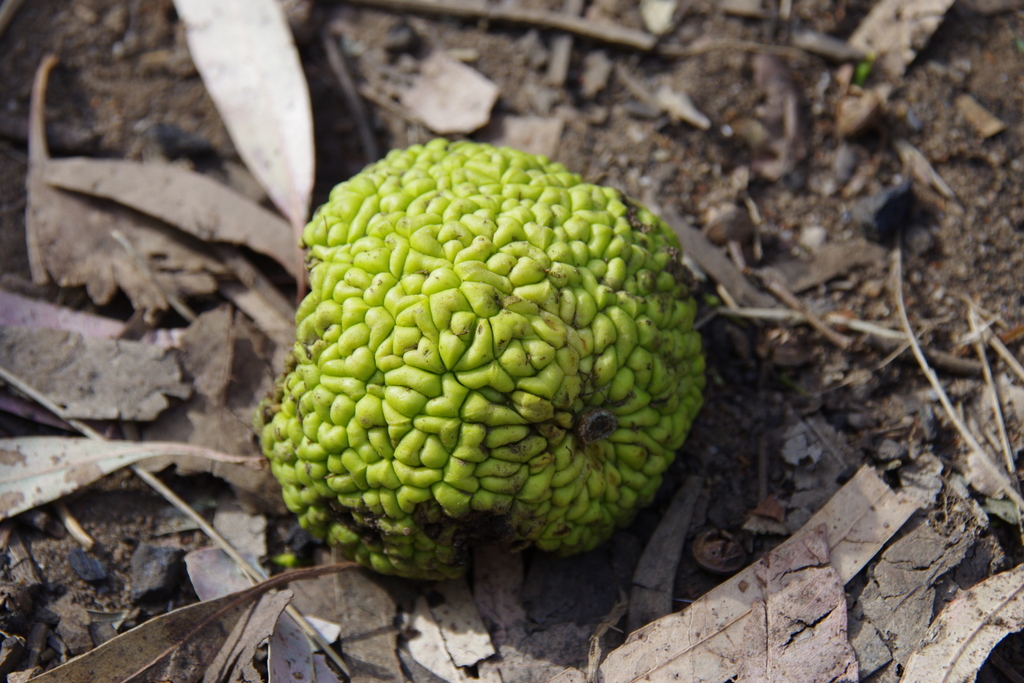
Maclura pomifera, commonly known as Osage-orange, is a deciduous tree notable for its large, rough, green fruits resembling oranges. Native to North America, it features deeply furrowed bark and thorny branches, making it ideal for defensive hedges or as an ornamental tree in large open spaces where its unique fruit and hardiness can be appreciated without tripping hazards. Its wood is exceptionally hard and durable.
Native range
South-central United States
Care tips
This tree is extremely adaptable and low-maintenance. It prefers full sun for best fruiting and vigorous growth, though it tolerates some partial shade. It is very drought-tolerant once established, requiring watering only during prolonged periods of extreme drought in its first few years. It adapts to a wide range of soils, even poor ones, but prefers well-drained conditions; avoid waterlogging, as it can rot the roots. A common mistake is planting it near high-traffic areas due to the fall of its large fruits, which can be a hazard.
How to save a dying Osage orange
- Warning signs
- Yellowing or premature leaf drop, small/deformed fruits, dry/brittle branches.
- First aid
- Check drainage, water deeply if soil is dry. Prune dead branches. Protect from extreme cold if young.
- What kills it
- Constant waterlogging, lack of sun, or severe, prolonged frost without protection.
- Can it be saved?
- Yes, if you act quickly. It's a resilient species that recovers well with proper care.
More Moraceae
Plants from the same family, with their care.
- Jackfruit Artocarpus heterophyllus
- Fustic Maclura tinctoria
- Rubber fig Ficus elastica
- Breadfruit Artocarpus altilis
- Maya nut Brosimum alicastrum
- Ficus elastica 'Tricolor' Ficus variegata
- Banyan fig Ficus retusa
- Red mulberry Morus rubra
- Black mulberry Morus nigra
- White mulberry Morus alba
- Fiddle-leaf fig Ficus lyrata
- Council tree Ficus altissima