Black mulberry (Morus nigra)
Care, watering, light and tips for Black mulberry on Floravia.
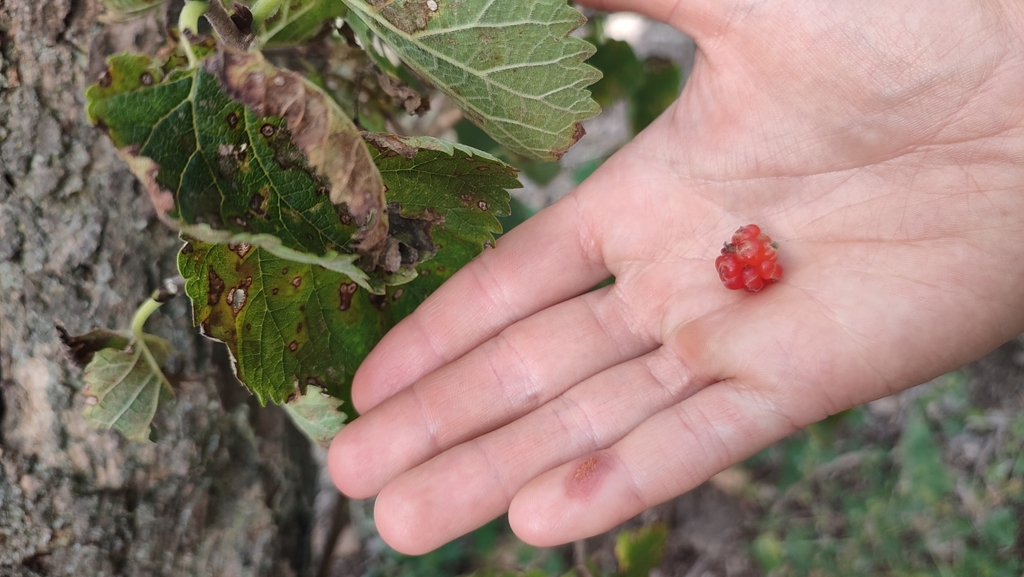
Quick facts
- Family: Moraceae
- Difficulty: Easy to care for
- Watering: every 5 days
- Light: Indirect light
- Temperature: 15–28 °C
About Black mulberry
Morus nigra, commonly known as black mulberry, is a medium-sized deciduous tree renowned for its sweet and slightly tart edible fruits. It features large, lobed leaves and a dense canopy that provides excellent shade. It's an ideal choice for home orchards or as an ornamental tree in spacious gardens.
Native range
Western Asia and the Indian subcontinent
Care tips
It requires full sun exposure for optimal fruit production and vigorous growth. Watering should be regular during warm and dry months, especially when the tree is young, reducing it once established. It prefers deep, well-drained, and fertile soils, tolerating a wide range of pH. A common mistake is the lack of formative pruning in the early years, which can result in a weak and less productive structure.
How to save a dying Black mulberry
- Warning signs
- Yellow or brown leaves falling prematurely, small or dry fruits.
- First aid
- Check watering (avoid waterlogging and extreme drought). Ensure good sunlight and drainage.
- What kills it
- Overwatering in heavy soils causing root rot, or prolonged drought.
- Can it be saved?
- Yes, if roots are not completely rotted or dried out. Act quickly.
More Moraceae
Plants from the same family, with their care.
- Jackfruit Artocarpus heterophyllus
- Fustic Maclura tinctoria
- Rubber fig Ficus elastica
- Breadfruit Artocarpus altilis
- Osage orange Maclura pomifera
- Maya nut Brosimum alicastrum
- Ficus elastica 'Tricolor' Ficus variegata
- Banyan fig Ficus retusa
- Red mulberry Morus rubra
- White mulberry Morus alba
- Fiddle-leaf fig Ficus lyrata
- Council tree Ficus altissima